My own creative journey began at the age of four, playing in a friend’s garage that had magically metamorphosed into a spaceship. Several old car parts were utilised as the navigational consoles and the alien detector. Plastic toy guns became laser cannons with which we would fend off otherworldly invaders. The garage’s mottled opaque windows were the viewing screens through which we would view the wonders of the universe — spaceships, galaxies, nebula, stars, planets and asteroids.
Although comics like The Dandy and Beano were the standard reading fare of children in the latter half of the 1960’s. My preferences tended towards Marvel and DC comics. The bright colourful images, simple dialogue and exciting stories were easy for my young mind to become lost in.
My friend and I would run around the back streets of our terraced housing estate playing the superheroes we loved. With my Superman cape blowing in the wind – an old towel around my shoulders – I would fight supervillains and aliens. Even back then, It was evident that I possessed a vivid imagination, decades before Star Trek, Star Wars, and the advent of the Marvel and DC film universes.
As a teenager, I began reading science fiction novels:
Frank Herbert’s Dune series. E. E. Doc Smith’s Lensman books. Issac Asimov’s Foundation and Robot series. Arthur C Clarke’s odysseys. Philip K Dick’s dystopian landscapes. Robert A Heinlein’s provocative social commentary.
On television, I watched Dr Who battle the Daleks from behind the sofa. I loved the camp and colourful Lost in Space — “Danger Will Robinson!” I forgave the rickety sets and budget special effects on Blake 7. And then came the classic Battlestar Galactica and Star Trek, to name but a few. My parents would accuse me of having my head in the clouds. And they were absolutely right.
Later, as a young man in the 1980’s, my first wife introduced me to dance classes. Eventually, we started our own group incorporating mime and robotic dancing long before it ever gained any popularity in the mainstream. This futuristic dance style attracted the attention of a band who initially wanted me to play the part of a robot on stage.
Gradually, I began to augment my dancing by playing basic keyboard parts on a synthesiser, a role which expanded still further until I was writing, performing and recording my own songs. About the same time I ran a live music venue, worked on regional radio featuring local bands and contributed to a magazine, writing reviews and interviews of local musicians.
It was as though someone had dropped a match into a box of fireworks. My creativity exploded, becoming both frenetic and compulsive. There were not enough hours in each day to feed my many artistic endeavours.
Monday, I’d be writing and rehearsing songs. Tuesday, doing a radio program. Wednesday, conducting an interview or writing an article. Thursday rehearsing with another band, and then at the weekend rehearsing and playing gigs with one of my three bands. Throughout all of this I was working a full time job. My passion was both a gift and a curse.
My single-mindedness and feverish enthusiasm was rarely equalled or reciprocated and so I ploughed a lonely, frustrated furrow. On reflection, many years later, I realised my expectations were both unreasonable and exasperating to my many collaborators. I quickly became disillusioned, about to give it all up, until one fateful day in 1982 when everything changed.
In the latter part of that year, I was employed at a hotel working split shifts — early mornings and evenings. There wasn’t much to do during my time off in the dark winter afternoons other than the occasional trip to the cinema.
Star Wars had come out in 1977 and wowed the world, followed by The Empire Strikes Back.
Star Trek had released The Motion Picture and then the superb, The Wrath of Khan.
We believed a man could fly with Christopher Reeve’s stunning Superman.
Ridly Scott’s Alien had scared audiences but it was his next film, the atmospheric, low key, film noir, Bladerunner, that I went to see on that fateful damp, frigid afternoon.
I left a dismal December day outside the cinema entrance and when I emerged a couple of hours later, the day hadn’t changed, but I had.
I guess people would say I experienced an epiphany. The stark dystopian beauty of Bladerunner had invaded the very core of my being, taking up residence in my head like a squatter and resolutely refusing to leave.
I bought the video when it eventually became available. As there was no internet back then, I had no choice but to engage in the protracted process of playing and pausing the video, learning the dialogue and transcribing David Peoples’ and Hampton Francher’s inspired screenplay on an A4 pad.
Gradually, I began to have my own ideas about a possible sequel and started writing scenes, creating my own original plot.
I guess I was infatuated by the Bladerunner universe and never tired of watching the film and hearing the wonderful lines of dialogue.
“I've seen things you people wouldn't believe.... Attack ships on fire off the shoulder of Orion....I've watched C-beams glitter in the dark near the Tannhauser gate....All those moments will be lost in time.... like tears in rain. Time to die.”
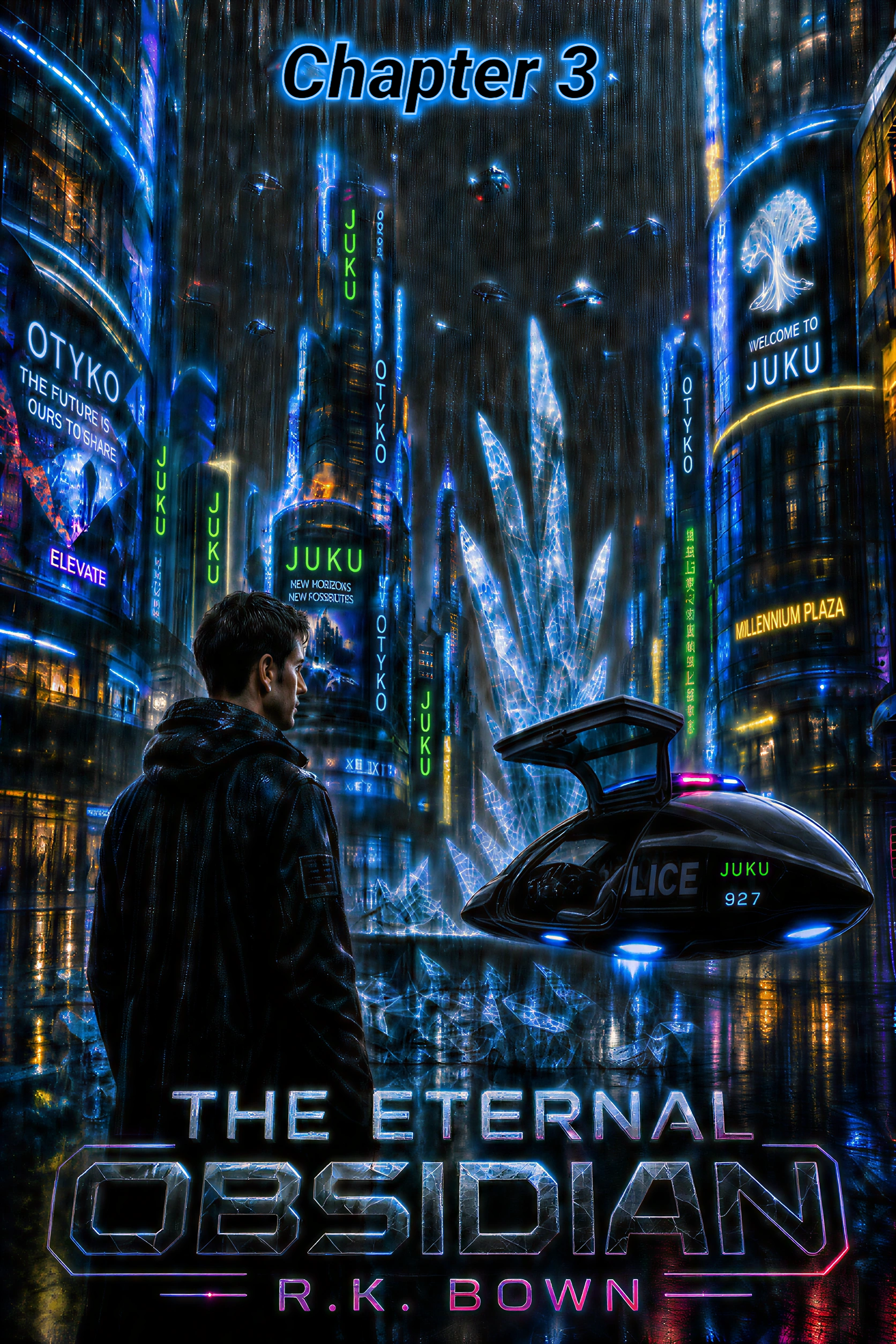
Several years after that fateful afternoon in 1982, I had a Bladerunner script of my own. I had a plot, scenes, dialogue and even a title for the sequel, Bladerunner Angelfall, but no idea what to do with it.
It was then I met Michael Cope, another aspiring writer with whom I shared a passion about science fiction. He began working on the idea with me but we quickly realised that the likelihood of this script ever being seen was almost zero. So we made the decision to change the idea into something original and the writing team of Walker/Cope was born.
It is perhaps ironic that the plot and concept I had created for the Bladerunner sequel perfectly mirrored the actual Denis Villeneuve film Bladerunner 2049. The screenplay was written by Hampton Francher and Michael Green and, much like my own idea, explored a world in which the characters of Rachel and Deckard conceived a child.
While developing the Bladerunner Angelfall project, we began writing short stories and entering them in an international competition called The Ian St James Literary Awards which ran for over a decade with associated magazines, The New Writer and Acclaim. Our stories were shortlisted an unprecedented five times and published in the magazines. One entry, a crime fiction story about a serial killer who left origami doves on his victims, was dramatised on BBC radio and attracted the attention of the top agents Peters Frazer and Dunlop. Regrettably, we had no plans at that time to write a crime novel and the opportunity slipped us by.
This sudden success had shown us that we could put together noteworthy stories but by this point we both had wives and families and due to the pressures of work, children and family commitments, dedicating time to the project became ever more challenging and the partnership regrettably stalled.
After the covid pandemic, I had the chance to work part time and this gave me the opportunity to dive back into the writing with a vengeance and start to bring the many novel ideas I had to life in both science fiction, fantasy and modern crime.
Now I’ve reached the point where I’m going to release the work out into the world like children who have grown to adulthood and are about to leave the nest to live their own lives. These children may make me proud, or like their flesh and blood counterparts, become dreadful embarrassments.
Only you can decide…





 (opens in new tab)

 (opens in new tab)
 (opens in new tab)